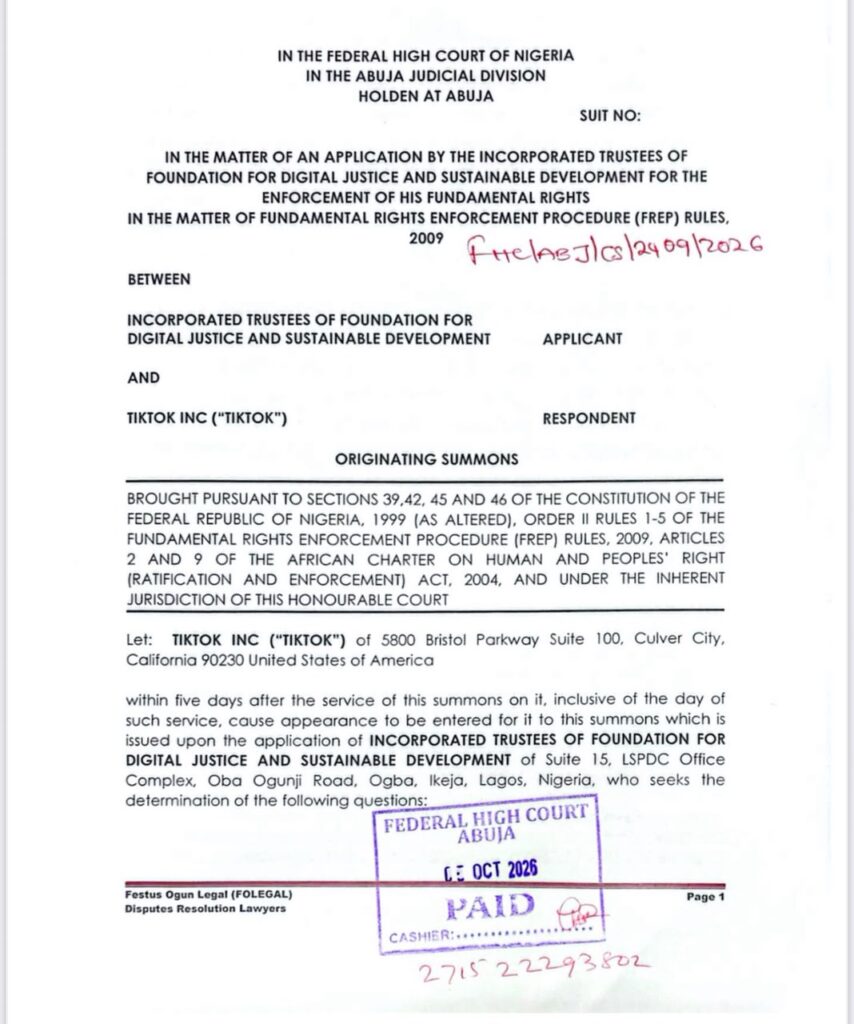
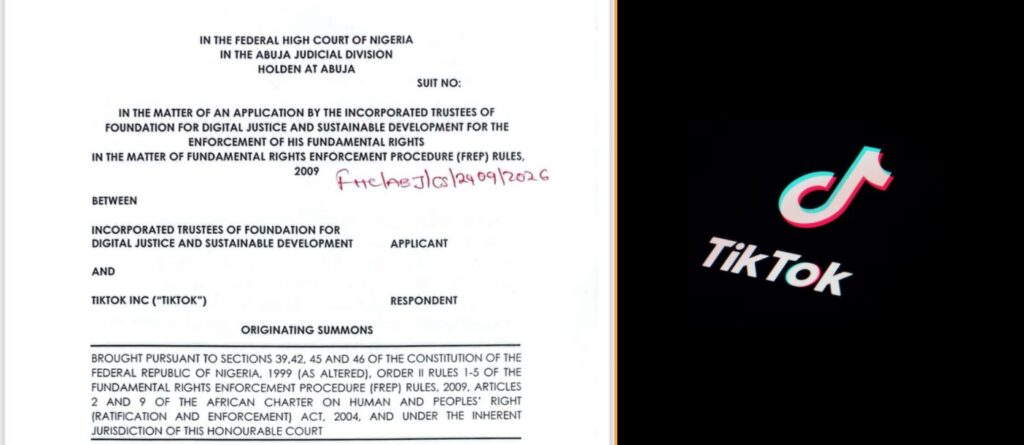
The Foundation for Digital Justice (FDJ) has filed a lawsuit against TikTok Inc at the Federal High Court in Abuja over restrictions on access to the social media platform in Kaduna, Kano, Kebbi and Sokoto States.
The Suit, filed on October 5 2026, seeks the court’s intervention over the unlawful and arbitrary restriction that has affected TikTok users in the four northern states. FDJ is asking the court to determine whether the restriction violates the constitutional rights to freedom of expression and freedom from discrimination.
Background
The access to TikTok has been disrupted in the affected states since September 14 2026, when TikTok users in Kaduna, Kano, Kebbi and Sokoto States began experiencing difficulties accessing the platform. While users in the affected states reported being unable to access TikTok normally, other internet services reportedly remained available. In addition, users who have been able to access the platform are those who make use of Virtual Private Network (VPN).
As platforms such as TikTok increasingly serve as spaces for communication, information, civic participation and public discourse, decisions that limit access to those platforms can have significant implications for fundamental rights.
FDJ seeks Restoration of Access and Big Tech Accountability
FDJ is asking the court to determine whether the restriction violates Section 39 of the 1999 Constitution and Article 9 of the African Charter on Human and Peoples’ Rights, which protect freedom of expression. It is also seeking a determination on whether the restriction constitutes unconstitutional discrimination under Section 42 of the Constitution and Article 2 of the African Charter.
Among the reliefs sought by FDJ is an order directing TikTok to remove the restriction and a perpetual injunction against further restrictions on users in Northern Nigeria or elsewhere in the country without lawful justification. It is also seeking a public apology from TikTok over the alleged violation of the rights of affected users.
Technology companies operating in Nigeria should not be beyond scrutiny when their decisions have consequences for fundamental rights. Digital platforms with millions of users wield considerable influence over how people communicate, access information and participate in public life. That influence, in FDJ’s view, must be accompanied by transparency, accountability and meaningful safeguards against arbitrary restrictions.
Continued commitment to defending digital justice
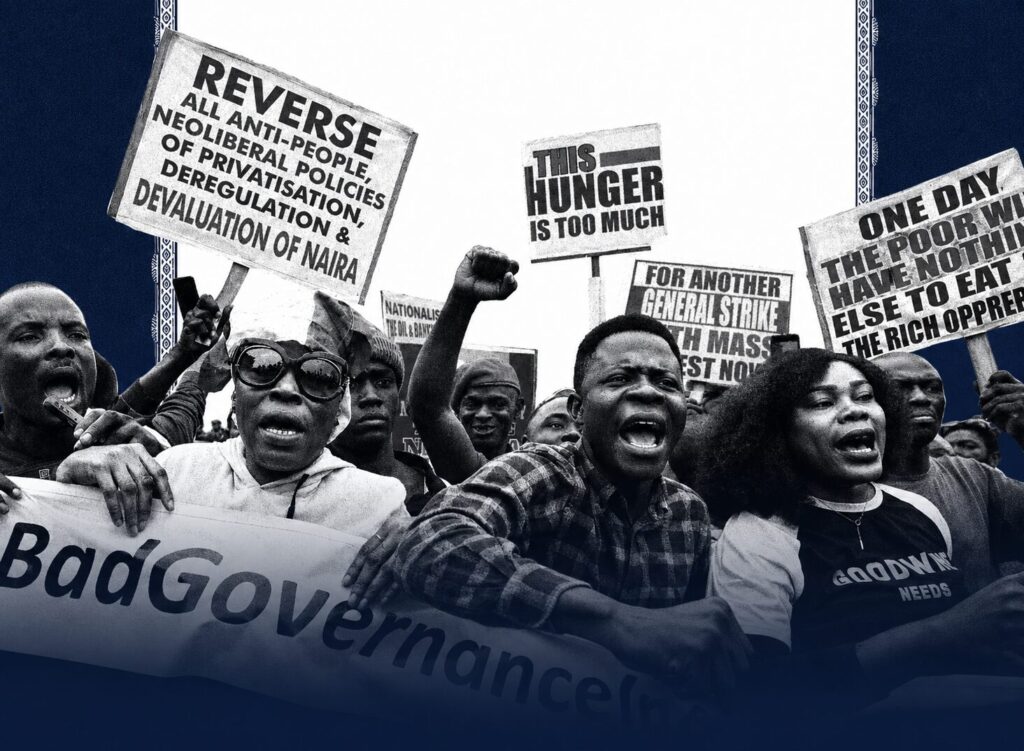
The lawsuit comes amid growing concerns over restrictions on access to digital platforms and their implications for freedom of expression and participation in Nigeria’s digital space. As an organisation, we believe that all Nigerians should be able to participate freely, safely and equally in the digital ecosystem, regardless of their geographical location.
We also believe that the growing power of Big Tech must be matched by corresponding responsibility and accountability to the people who depend on these platforms. FDJ will continue to use strategic litigation, advocacy and public-interest interventions to challenge digital rights violations and promote a digital ecosystem in which governments and technology companies alike are accountable for decisions that affect fundamental rights.