
When a public institution investigates a question about its own leadership, announces the result, and then declines to show anyone the work, it asks the public for something it has not earned: trust on credit. That is the position the Independent National Electoral Commission has taken over a forensic report it commissioned in April, and it is why the Foundation for Digital Justice is now before the Federal High Court in Lagos.
What happened
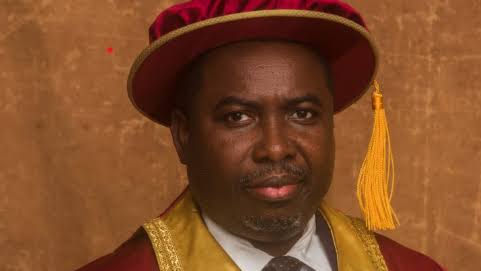
On 10 April 2026, screenshots circulated on social media claiming that an X account, @joashamupitan, belonged to INEC’s chairman, Professor Joash Amupitan, and had carried a partisan comment. The Commission commissioned an independent forensic cybersecurity examination of the account. It then announced the conclusion: the account was fake, and “forensically unverifiable”.
The conclusion was made public. The report behind it was not.
What we asked for
On 21 April 2026 we filed a request under the Freedom of Information Act, 2011. We asked for five things:
- a certified true copy of the full forensic investigation report;
- the identity and professional credentials of the independent expert or firm that produced it;
- the engagement letter or service agreement setting out the scope and terms of the work;
- the total sum paid, with a breakdown;
- the procurement records, selection criteria and certificate of completion.
Those five items are not incidental to the finding. They are what makes the finding checkable. A forensic conclusion is only as reliable as the method that produced it, the independence of the person who applied it, and the terms under which they were engaged. Without them, “forensically unverifiable” is a phrase rather than evidence, and the public is invited to accept it on the Commission’s word alone.
What the law required
Section 4 of the Freedom of Information Act gives a public institution seven days to release the information requested or to issue a written notice of refusal, stating the grounds and the requester’s right to seek review. INEC did neither. It did not release the report. It did not refuse it in writing. It did not reply at all.
Silence is not one of the options the Act provides. A refusal, however unwelcome, at least gives a citizen reasons to test. Silence is designed to give them nothing to hold.
The case
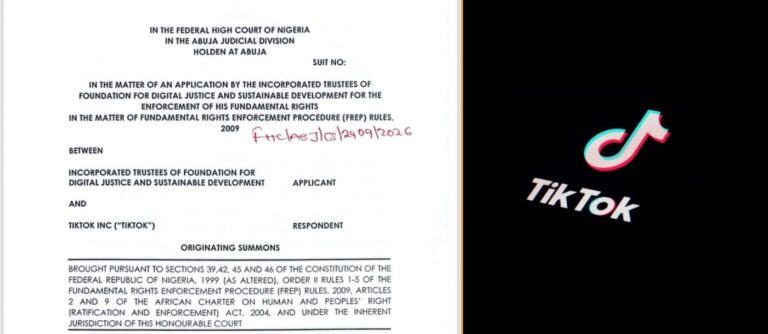
Suit FHC/LAG/CS/890/2026 is before Justice Akintayo Aluko at the Federal High Court, Lagos. We ask the court to declare that the Commission’s failure to respond violates section 4 of the Freedom of Information Act, 2011 and section 39 of the Constitution of the Federal Republic of Nigeria, and to order INEC to release the forensic report and disclose the identity and professional profile of the expert who prepared it.
We are not asking the court to disturb the Commission’s conclusion. We are asking it to require the Commission to show its work.
Why this reaches beyond one account
Digital impersonation of public officials is a genuine and growing harm, and we treat it as one. If the account was fabricated, the evidence establishing that is a public good. Publishing it would protect the chairman more effectively than withholding it does, because a report nobody can read cannot settle an argument.
There is a longer-term question too. INEC will be asked to weigh contested digital evidence again, and more often, as elections move further onto platforms it does not control. The standard of openness it sets for its own investigation now is the standard it will be measured against when the disputed account belongs to someone else. An institution that will not disclose a report clearing its own chairman will struggle to be believed when it discloses one that does not.
Transparency litigation of this kind sits at the centre of what we do: using the tools the law already provides to make digital governance in Nigeria answerable to the people it governs. You can read more about our approach to strategic litigation and policy advocacy.
The filing of this suit was reported by TheCable and Platform Times. Our original Freedom of Information request was first reported by TheCable in April.